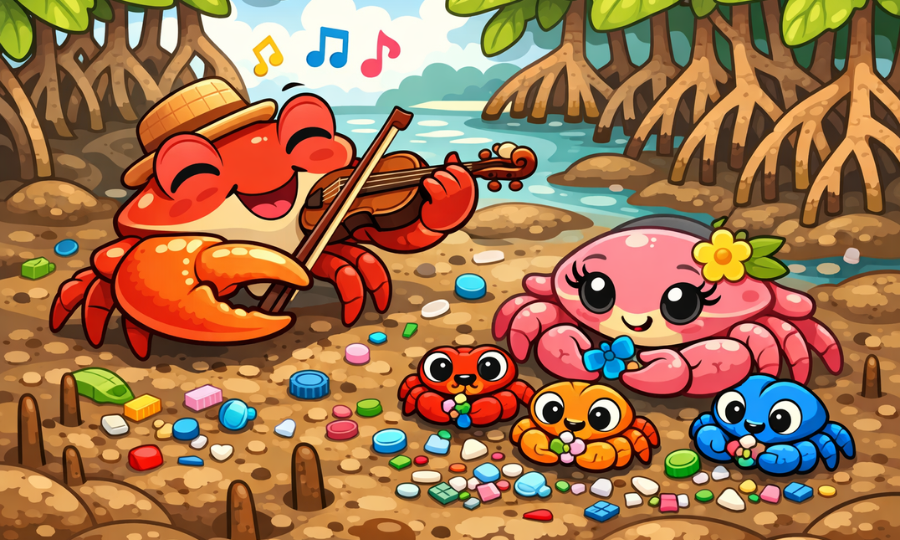
Ai illustration: cartoonish group of fiddler crabs

🦀The Fiddler Crab and the Tiny Plastic Mystery🦀

by Sofia Giakoumi

Fiddler crabs are hilarious to watch! The boys have one giant claw and one tiny claw - like they’re holding a mini violin.

They live in squishy, muddy places called mangrove forests. All day they scoop sandy mud, pop it in their mouths, and pick out tiny food like algae. When they’re done, they spit out cute little sand balls near their homes - very tidy (and very muddy).
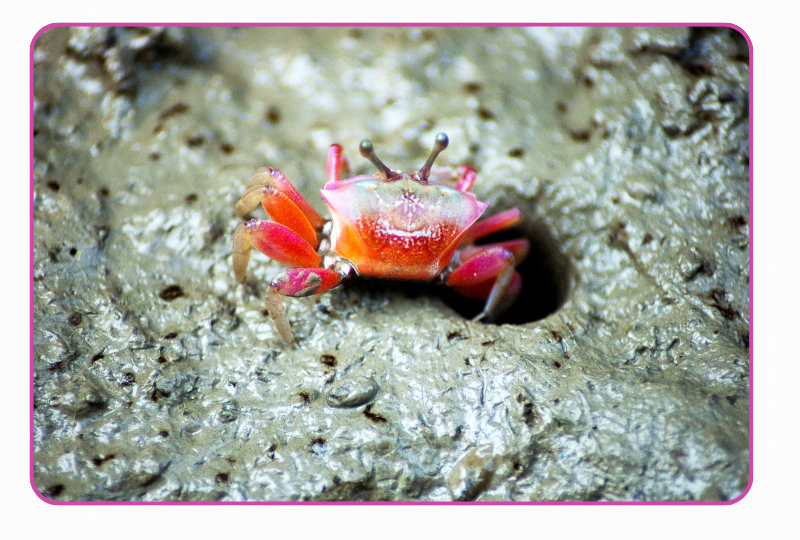
Photo:  Fiddler Crab

Scientists foun d something surprising: while the crabs eat, they can also swallow tiny bits of plastic called microplastics that hide in the mud. In one study, crabs living in a dirty mangrove area had these tiny plastic pieces inside their tummies after feeding. Some pieces even ended up broken into smaller bits inside the crab, thanks to their strong tummy tools (and helpful tiny germs that live there).

This helps scientists learn how plastic travels through nature. We still don’t know exactly how these tiny pieces affect crabs or other animals. But one thing is crystal clear: the best way to help sea life is to stop plastic from reaching the ocean.
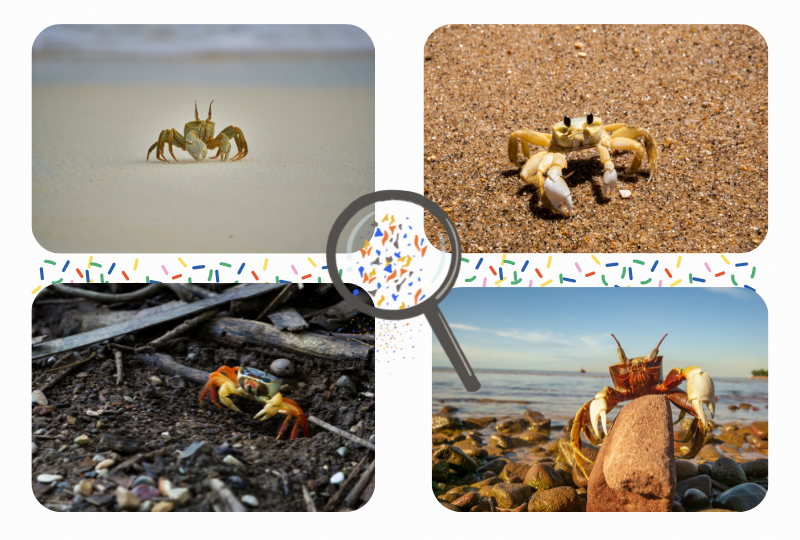
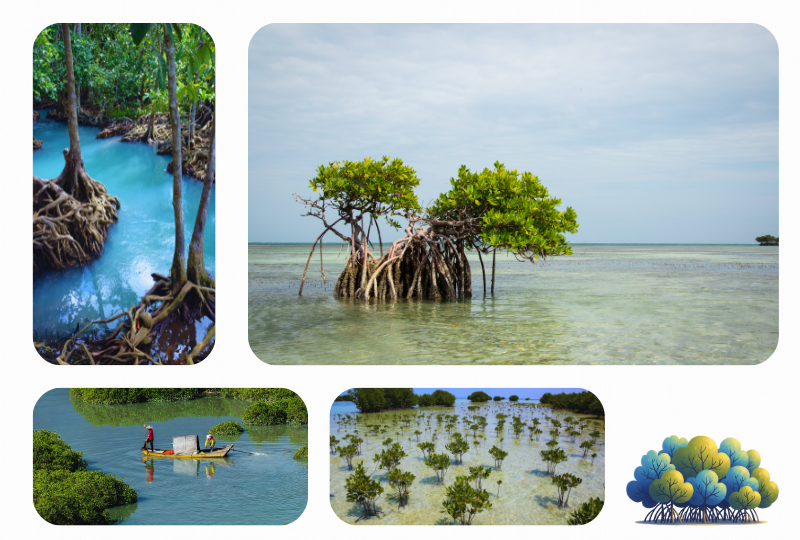
Photo: 4 Fiddler Crabs

Really? A violin?

Fiddler crabs don’t really play violins… but if they did, the concerts would be mud-nificent.

What’s a mangrove forest?
A unique, seaside forest where special trees grow in muddy and salty water.

Photo: Mangrove

What are microplastics?
Tiny plastic bits, so small you might miss them (anywhere from a speck to the size of a grain of rice), which are insoluble in water.

Insoluble in water means it won’t disappear or mix in, even if you stir.

  • Sugar in water = disappears (soluble).

  • A tiny plastic bit or a pebble in water = stays there (insoluble).

Think: water + sugar = juice, BUT water + plastic = still water + plastic.

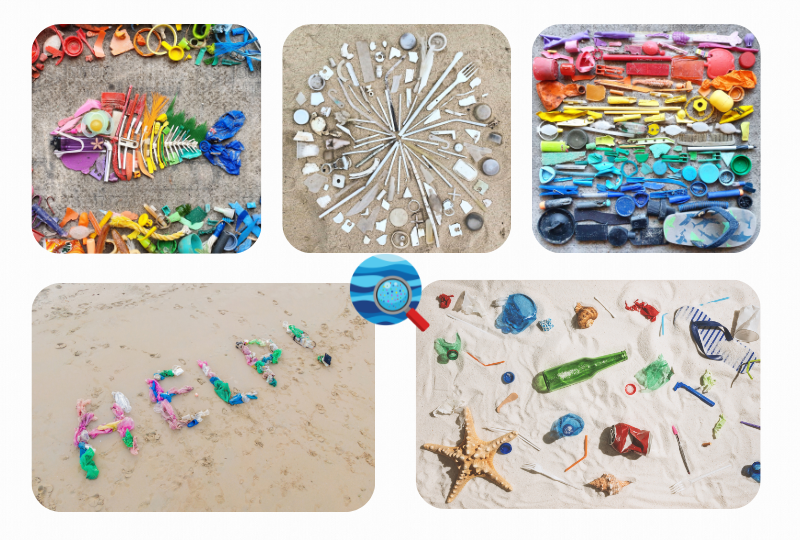
Photos: plastic art

References  José M. Riascos, Daniela Díaz, Lina M. Zapata-Restrepo & Tamara S. Galloway (2025). Beyond Abiotic Decay: Fiddler Crabs Accelerate Plastic Fragmentation in Pollution Hotspots. Global Change Biology 31 (12): e70651.

UNDER THE SEA IS THE PLACE TO BE!

BBB Patreon Logo

  I   About Us  I  Cookies  I  Terms of Use  I  Privacy Policy  I  Accessibility  I  Contact  I

Save
Cookies user preferences
We use cookies to ensure you to get the best experience on our website. If you decline the use of cookies, this website may not function as expected.
Accept all
Decline all
Read more
Analytics
Tools used to analyze the data to measure the effectiveness of a website and to understand how it works.
Google Analytics
Accept
Decline
Advertisement
If you accept, the ads on the page will be adapted to your preferences.
Google Ad
Accept
Decline